Zero Hedge

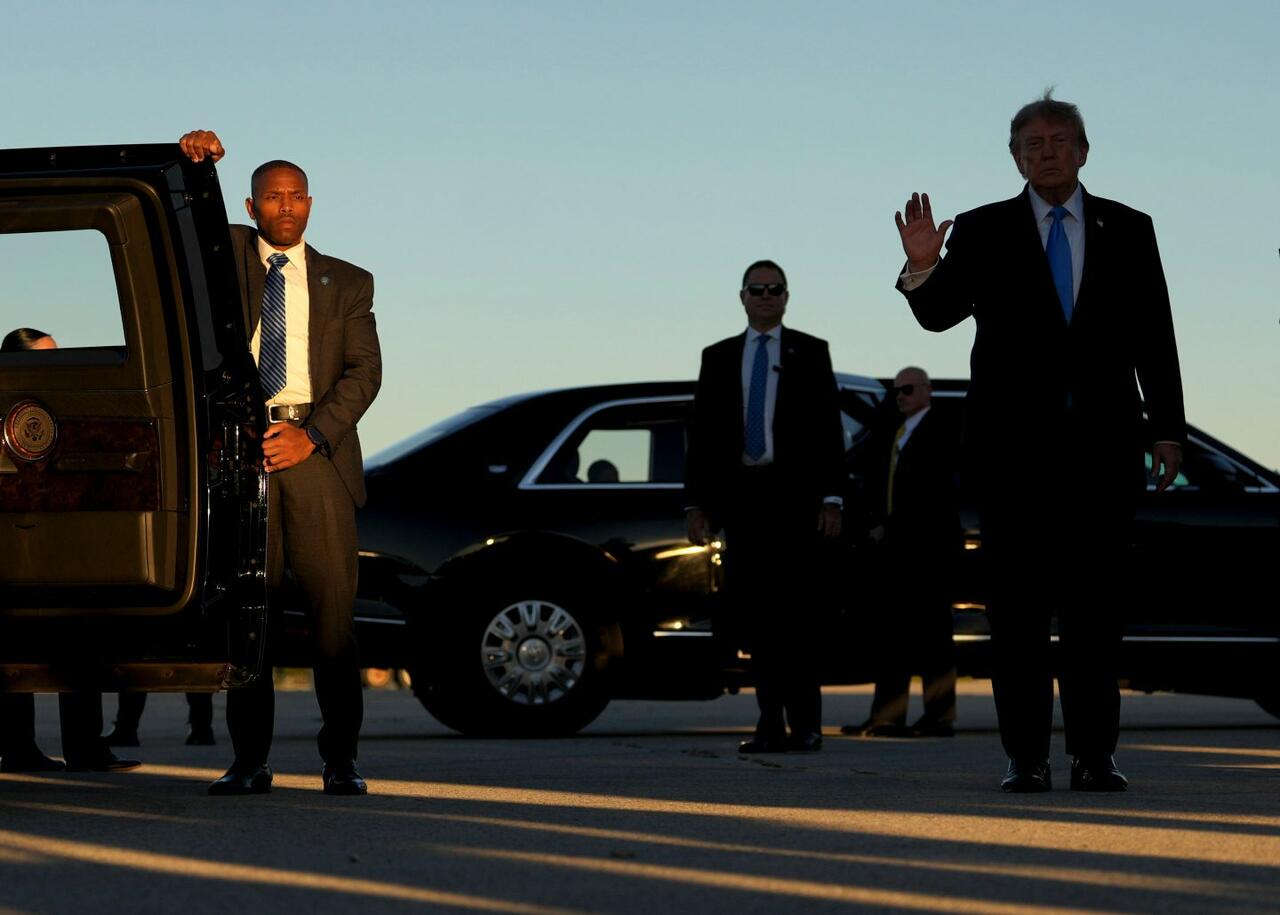
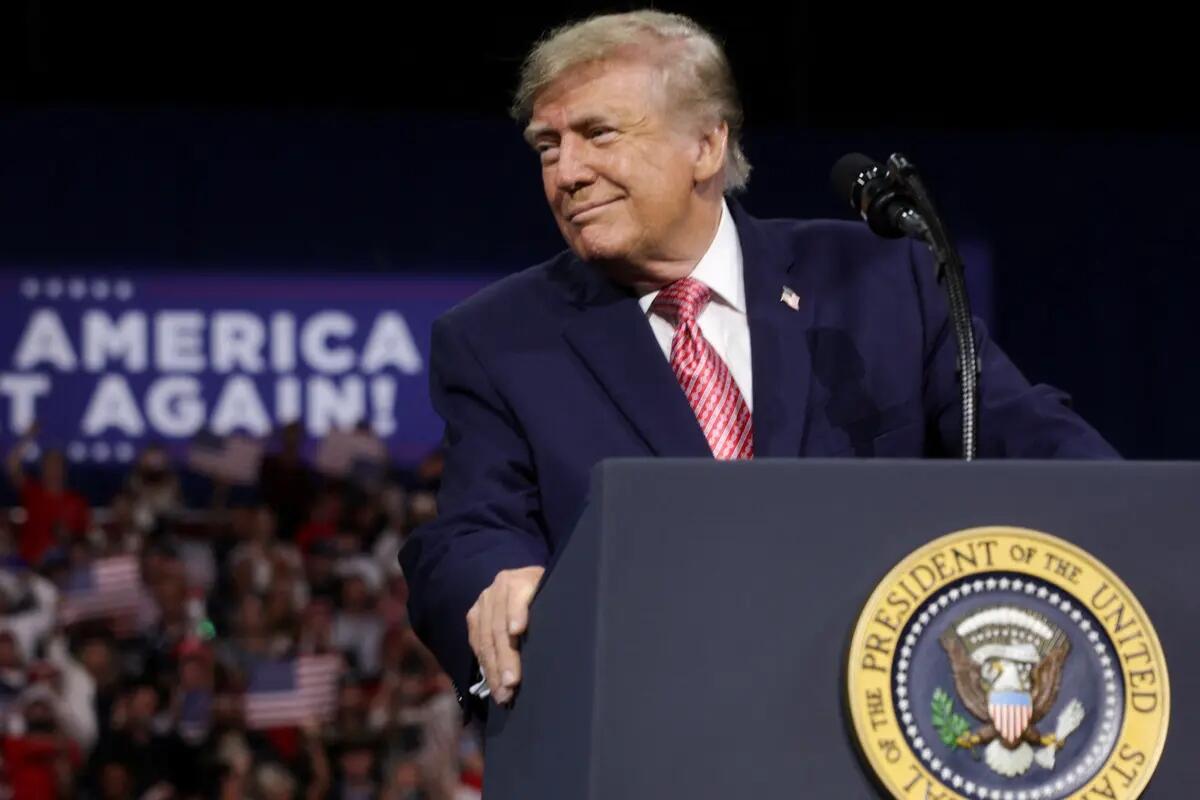
Trump Is Furious With Senate GOP, Puts Thune In His Crosshairs

Trump Is Furious With Senate GOP, Puts Thune In His Crosshairs

Donald Trump does not like the word "no." He likes it even less when it comes from John Thune, the Senate majority leader whose job description apparently does not include telling the president what he wants to hear. That dynamic has now spilled into public view, and the fallout says as much about the state of the Republican Party as it does about any single piece of legislation.

The flashpoint is the SAVE America Act. The House passed it back in February, but it remains stalled in the Senate due to the Democrats’ filibuster.

The SAVE America Act would require proof of citizenship to register to vote, mandate voter ID at polling places, and sharply curtail mail-in voting. For Trump and a sizable chunk of the conservative base, this is common-sense election integrity; polls show tremendous bipartisan support for it.

Trump has grown tired of waiting. Last week, he tied the SAVE America Act to FISA Section 702 reauthorization, the surveillance authority that lets intelligence agencies monitor foreign nationals without a warrant. Congress let that authority lapse for the first time since 2008, and Trump made clear he intends to use it as leverage. "I will not approve FISA without THE SAVE AMERICA ACT going along with it," he posted on Truth Social. That is not a man asking nicely.

Thune was unmoved.

"The president has his own mind, makes his own decisions," he said. "So do we."

Read that as you like, but it does not sound like a man rushing to fall in line.

According to a person close to Trump who spoke with The Wall Street Journal, the president's frustration stems from being told “no” rather than "no, let me try." 

A Thune ally pushed back on the Journal's reporting, arguing the majority leader is not the real obstacle here. Trump simply does not have the votes. That is a fair point, and it gets at something deeper than personal chemistry: the SAVE America Act faces a math problem before it faces a Thune problem.

Sen. John Cornyn (R-Texas) told the Journal that Thune is "telling the president the truth" and that "the problem is the president doesn't like hearing that when it frustrates what he wants to do." Sen. Cynthia Lummis (R-Wyo.) offered a gentler diagnosis, describing the clash as one of temperament rather than substance. Trump's "skill set is to vocalize everything," she said, while Thune's is "more quietly engaging." She added, "I don't think they're mutually exclusive." Sen. John Kennedy (R-La.) never one to pass up a colorful comparison, likened Trump to the ruthless sales trainer from Glengarry Glen Ross during a closed-door GOP lunch, according to Punchbowl News. On the Senate math itself, Kennedy was characteristically blunt with the Journal: "I mean, I want a Porsche for my birthday. I'm not going to get it."

Trump has not limited himself to public jabs, either. He summoned House Speaker Mike Johnson to the White House to discuss personnel disputes and the lapsed FISA law, conspicuously leaving Thune out of the conversation. He has also been quietly polling Republican senators on their views of Thune's leadership, a clear signal that his patience with the majority leader is running thin.

Sources also told The Daily Caller that Thune privately admitted to GOP senators during a closed-door lunch on Wednesday that some Republicans simply will not back the SAVE Act because they cannot stand Trump, regardless of the bill's merits.

The admission reportedly set off a heated exchange between Sen. Mike Lee (R-Utah), the bill's chief sponsor, and colleagues, including Cornyn, who challenged Lee's push alongside Thune.

"Yeah, that totally happened," one source familiar with the meeting told The Daily Caller. Thune's office denied the account outright, calling it "a baseless claim" that is "unequivocally untrue."

A president quietly canvassing his own party and questioning the Senate majority leader’s leadership is a power struggle over who actually runs the Republican agenda. Trump clearly sees Thune as a roadblock he's preparing to remove.


Tyler Durden Sun, 06/21/2026 - 13:25

Iran's Araghchi Says Talks Delivered "Major Progress" To End Lebanon War, Will Continue For Rest Of Week

Iran's Araghchi Says Talks Delivered "Major Progress" To End Lebanon War, Will Continue For Rest Of Week Summary
  • Round 1 ends: The US and Iran made “encouraging progress” in talks on a peace deal and will continue technical-level discussions this week, mediators
  • Iran defiant, sees itself in strong position: Ghalibaf rejects US threats and links talks to a Lebanon ceasefire.
  • Trump raises stakes via some typical Truth Social lashing out: Warns on Hormuz, Lebanon, and keeps military options on the table.
  • Nuclear progress?: Some reports say not addressed, others suggest framework already being worked on.
//--> //--> //--> Israel withdraws from Lebanon by July 31, 2026?
Yes 12% · No 88%
View full market & trade on Polymarket

*  *  *

US and Iran Make “Encouraging Progress” In Talks On Peace Deal, Will Continue Technical-Level Discussions This Week

Contrary to earlier reports from Iran media that US and Iran talks had concluded hours earlier, Bloomberg reported that the US and Iran made “encouraging progress” in talks on a peace deal and will continue technical-level discussions this week, mediators said, even as President Donald Trump again threatened strikes if Hezbollah keeps attacking Israel.

“Encouraging progress has been made including the creation of a mechanism for further technical talks,” mediators Qatar and Pakistan said in a joint statement. The parties agreed on a roadmap toward reaching a final deal within 60 days.

The sides also established a communication line to avoid incidents and miscalculation, with the aim of ensuring safe passage for commercial vessels through the Strait of Hormuz, the mediators said. They also agreed to create a “de-confliction cell” involving the parties and Lebanon to help ensure adherence to the cessation of military operations there.

After rising in early trading following reports that Iran (almost but not really) had walked out on talks, crude oil turned lower and US stock-index futures pared losses after the statement.

Pakistani and Qatari mediation delivered major progress to end the Lebanon war, Iranian Foreign Minister Abbas Araghchi said in a post on X: "Tireless Pakistani and Qatari mediation has delivered major progress to end Lebanon War. Oil and petrochem exports are waived, blockade lifted, some frozen assets released, and major reconstruction & development plan launched for Iran. 1st real test: Lebanon deconfliction cell" the post said.

Things got off to a confusing start Sunday when Iranian media reported that Iran halted talks over Trump’s latest threat. As the meetings got underway, Trump said in a social media post that he would strike Iran again if it doesn’t “immediately stop their highly paid PROXIES in Lebanon from causing trouble.”

He also warned Iran that the US might start collecting tolls if there’s no deal. Speaking Sunday to Fox News, Trump said he told Iranian leaders directly that if they close Hormuz, “You won’t even make it back” to Iran, using an expletive.

Some Fireworks

Al Jazeera is reporting that talks have 'concluded' - but is this in actuality a premature conclusion given all the tension and heated issues of disagreement which came to the forefront?

  • GHALIBAF: THEY'D BE BETTER OFF BEING CAREFUL W/ THEIR REMARKS
  • IRAN'S GHALIBAF: WE DON'T ATTACH ANY SIGNIFICANCE TO US THREATS
  • IRAN PARLIAMENT SPEAKER GHALIBAF COMMENTS ON X
  • IRAN WILL END TALKS W/ US IF ISRAEL WON'T LEAVE LEBANON: TASNIM
  • IRAN SAYS TRUMP'S THREAT IS A 'BLATANT VIOLATION' OF MOU

Below is a machine translation of what Iran's lead negotiator just issued on X as the day in Switzerland came to an end (also, another translation)...

"Do they not realize that if their threats actually worked, they wouldn't find themselves in today's position of desperation? We don't take American threats seriously.

They should be careful about what they say. Our armed forces stand ready to answer them in other ways. They can keep talking—it's we who take action."

This is immediately on the heels of Trump playing 'bad cop' to Vance's good cop, who has expressed some cautious optimism on Sunday from Switzerland. Bloomberg is reporting that the nuclear file was not dealt with in today's engagement.

The fact that the Swiss event happened at all can be called advancement on some level at least...

Rumors of Iranians already calling it quits are false, reports Axios:


Trump Reminds Iran Of 'Harder' Military Options On Table

With Vance and Witkoff in Switzerland, President Trump is still issuing some US redlines via Truth Social, and via apparent 'official leaks' - and quite quickly - through the press.

Trump is warning the Iranians on the sticking points of Hormuz closure and the Lebanon crisis. He has newly threatened on Sunday to hit Iran again if it can't constrain its proxies, namely Hezbollah, in Lebanon. In parallel, Tehran is demanding that Washington reign in Israel. A fresh Sunday Truth Social... brief but firm:


And more on some fresh reported warnings and pressure coming from Trump:

As the American delegation continues the high-stakes negotiations in Switzerland aimed at de-escalating, the White House is projecting cautious optimism while simultaneously reminding Tehran that military options remain firmly on the table.

Speaking as talks entered a critical phase, Vice President JD Vance said Sunday from Switzerland Washington has "made great progress over the last few hours" and expects "additional progress in the coming hours," describing the negotiations as an opportunity to "turn over a new leaf" in US-Iran relations. Vance emphasized that the administration's preference is not to return to the cycle of confrontation, adding that the US is willing to fundamentally transform ties with Iran if Tehran permanently abandons its nuclear ambitions.

"The question is how much more we can achieve in the Middle East," Vance said, while expressing confidence regarding the Lebanon front and signaling satisfaction with ongoing efforts to contain broader regional escalation.

"Better Watch His Mouth": Trump to Iran President via Media

Yet Trump has just delivered a stark reminder of the consequences should negotiations fail. According to Fox News, Trump warned Iranian officials that closing the Strait of Hormuz would be an existential mistake, reportedly telling Tehran that it "won't have a country" if it attempts to choke off global energy flows, in the segment above. Trump also issued a personal warning to Iranian President Masoud Pezeshkian, saying he "better watch his mouth," while reports indicated the president used unusually blunt language during discussions with Iranian intermediaries over the strategic waterway.

Perhaps most notably, Trump reiterated that he retains a "60-day option" and can "do whatever" he deems necessary after that period expires, a statement widely interpreted as preserving the possibility of renewed military action. The president also reportedly threatened additional strikes against Iran should Tehran's regional proxies in Lebanon resume attacks or undermine the emerging diplomatic framework.

The result is a familiar carrot-and-stick approach as talks are unfolding under the shadow of explicit US military threats and a rapidly approaching deadline that could determine whether the region moves toward détente or another round of escalation. But Iran has also made known that it is ready of a long war, but will Trump be willing to risk enduring the political and economic fallout?

Qatari, Pakistani Top Leaders Present, Optimistic Initial Statements

Qatar's Foreign Ministry has formally confirmed the launch of the talks between the United States and Iran with the mediation of Qatar and Pakistan in Switzerland, with the Iranian delegation headed by Parliament Speaker Mohammad Bagher Ghalibaf and Foreign Minister Abbas Araghchi.

US Vice President JD Vance is leading the American side along with envoy Steve Witkoff. Also gathered at the Buergenstock Resort Lake Lucerne, near Stansstad, are Pakistan's Chief of Army Staff Field Marshal Asim Munir, and Pakistan's Prime Minister Shehbaz Sharif.

Qatar has expressed "its aspiration that these meetings will lead to the conclusion of a comprehensive and permanent agreement addressing all aspects covered in the Memorandum of Understanding." Iran has reiterated it wants a comprehensive settlement and final end to the war. But it also demands a final Lebanon-Israel peace settlement be linked in. Already there could be an inkling of progress on the nuclear front:

  • PAKISTAN:US, IRAN AGREED ON REDUCTION OF ENRICHED URANIUM LEVEL
  • PAKISTAN:IRAN'S ENRICHED URANIUM TO BE REDUCED FROM 60% TO 0.7%
  • IRAN PRESIDENT SAYS QATAR TO RELEASE $6B AS TALKS START: IRNA
Screengrab via Government of Pakistan footage

The last time Vance sat physically across from Iran's lead negotiator Ghalibaf was a full ten weeks ago, in mid-April. Interactions appear to initially be only through intermediaries, which will build up to face-to-face meetings, as happened in prior failed rounds. 

What to Expect in 1st Round Format

Qatar's foreign ministry has previewed the following planned format to the opening of the talks as follows:

  • The ministry statement says “specialized technical and expert groups have been formed to negotiate the terms of the final agreement, which will cover all aspects of the Memorandum of Understanding” between the US and Iran.
  • “Additionally, follow-up groups have been established to oversee the implementation of the Memorandum, monitor progress achieved, and work toward the conclusion of the final agreement,” it added.
  • “This reflects the commitment of all parties to moving forward in the negotiation process in good faith, with the aim of reaching a comprehensive and sustainable agreement.”

Of course, in terms of "implementation" of just the MoU itself, things are not quite there yet, as sporadic fighting and Israeli aerial attacks continue in Lebanon, which could serve to derail the Switzerland process at any moment.

Additionally, Iran has declared it has 'closed' the Strait of Hormuz just this weekend, but which the US military has been denying is a reality. VP Vance in media appearances has also been downplaying it.

The Lebanon situation seems the bigger, more pressing threat to the peace process - at least from Tehran's point of view. Dozens of people in Lebanon have been killed while at least six Israeli soldiers have been slain, with 20 wounded over past days of Hezbollah rocket and drone attacks.

Trump Between a Rock & A Hard Place Where Escalation is Concerned

As a reminder, President Trump doesn't want to oversee an economic catastrophe driven by a worldwide energy crisis. It seems he's ready to anything to not let it happen under his watch:

President Donald Trump said Wednesday that he was motivated to finalize the memorandum of understanding (MOU) with Iran to prevent “economic catastrophe” if the war was not resolved soon.

“So rather than possibly going into a depression, rather than having your favorite president be Herbert Hoover, he was always the one I didn’t want to be,” Trump said of the 31st president whose policies are often blamed for starting the Great Depression.

“I didn’t want to see economic catastrophe. If you kept this going, that could have happened. But all I know is, every time we talked about the possibility of peace, the stock market shot up like a rocket ship,” Trump said during a press conference Wednesday on the sidelines of the G7 Summit in Évian, France.

And so judging by this and other of recent Trump admissions, Iran clearly enters Switzerland in very strong negotiation position. Its current rhetoric regarding the Strait of Hormuz also reveals this.

Tehran has accused the US of a "clear breach of its commitments" and announced Saturday that "the Strait of Hormuz will be closed to the passage of vessels," according to state broadcaster IRIB.

More Details on Format

For more on the details of the format, CNN has reported some further information in the following:

  • When and where do the talks start? US and Iranian negotiators will begin their meeting at around 1 p.m local time (7 a.m. ET) at the Swiss mountain resort of Bürgenstock, an Iranian source told CNN.
  • Who will be there? Both the United States and Iran have sent high-level officials to Switzerland. Vice President JD Vance is heading up the US side, while Iran’s lead negotiator, Mohammad Bagher Ghalibaf, will lead Tehran’s delegation, Iranian media outlet Saberin News reported Saturday.
  • What format will they take? Iran’s Foreign Ministry spokesman, Esmail Baghaei, who is part of the Iranian team, earlier told state media “the Iran-US talks will be held in a quadrilateral format, with the presence of Pakistani and Qatari delegations.”
  • What will be discussed? Lebanon is likely set to top the agenda after clashes between Israel and Hezbollah threatened the nascent agreement between the US and Iran. Vance says he hoped he would make advancements on negotiations surrounding the handling of Iran’s nuclear materials.
Long Road Ahead

To put things in perspective about the long road ahead, analyst and reporter James Bayes - who is on the ground for the talks in Switzerland, has offered the following: "This is a very different deal from the Iran nuclear deal that was done by [former US] President Barack Obama … things have changed completely. But I think it’s worth looking at that deal for one reason, which is the timeline – how long these things take."

Iranian Foreign Minister Seyyed Abbas Araghchi, center, arrives at the Buergenstock resort in Obbuergen, near Lucerne. Pool via AP

"Because when they did an interim deal then, in November 2013 until the final deal in 2015, it took 597 days," the correspondent added. "So, even though the circumstances have changed – it’s a very different deal and they’ve got the knowledge of that deal as well which is helpful – it’s a lot to do in just 60 days."

Tyler Durden Sun, 06/21/2026 - 13:00

California Declares State Of Emergency Over Los Angeles Warehouse Fire, Smoke

California Declares State Of Emergency Over Los Angeles Warehouse Fire, Smoke

Authored by Melanie Sun via The Epoch Times,

California Gov. Gavin Newsom declared a state of emergency on Saturday after the Los Angeles mayor asked for state disaster support in the wake of an ongoing warehouse fire that continues to burn more than three days after it started on June 17.

“California is mobilizing to support Los Angeles as firefighters and emergency personnel continue their work to contain this fire and protect surrounding communities,” Newsom said in a statement.

The state has predeployed public health and emergency resources to the city, including 5.5 million N95 masks and commercial-grade air purifiers for community facilities.

“We are coordinating closely with our local partners, deploying specialized expertise, and pre-positioning critical supplies so communities have the support they need both now and throughout recovery,” Newsom said.

Caroline Thomas Jacobs, director of the California Governor’s Office of Emergency Services (Cal OES), said in a statement that her agency is “working side-by-side with the City of Los Angeles, Los Angeles Emergency Management Department, Los Angeles Fire Department, and our regional partners to ensure they have the resources, information, and support necessary to respond to this incident.”

“The State of Emergency allows us to further streamline coordination efforts and leverage additional state capabilities as needed,” she added. “Our focus remains on protecting communities and supporting locally led response operations.”

The state is also assisting with “enhanced air quality monitoring and technical support resources,” Newsom’s office said.

Smoke is still emanating from the fire at the warehouse, which first responders are struggling to completely extinguish due to a lack of visibility inside the massive cold-storage facility in Boyle Heights—located just five miles southeast of downtown LA.

According to an update earlier Saturday from Los Angeles Fire Department Chief Jaime Moore, the risk from hazardous materials at the warehouse has been contained.

The damaged facility connects food products to approximately 10 million people, said Lineage Logistics, the private owner of the supply chain hub.

Local news stations showed smoke billowing from the burning roof of the 491,000-square-foot warehouse, where it is believed to have started around 2:30 p.m. on June 17. The roof of the facility is covered in solar panels.

The roof fire was extinguished within six hours, but firefighters are still struggling to gain entry to parts of the interior due to a buildup of thick smoke.

“We have 85 million pounds of frozen food inside of this facility and the way the building has been laid out, it’s very difficult for us to get in there because there’s zero visibility inside,” Moore said

“Our firefighters are not able to just go in there and start moving pallets.”

Earlier Saturday, Los Angeles Mayor Karen Bass said the city needed state assistance to safely dispose of the millions of pounds of spoiling biowaste in a way that will avert a major environmental disaster.

Lineage said Saturday that the cause of the fire has still “not been determined.”

“We are working closely with local officials to assist in all investigations and remediations of the fire and will continue to do so as we cleanup once the site is safe for entry,” its statement read.

No workers at the warehouse were injured during the fire.

A firefighter walks down the street as a massive warehouse fire at a cold storage facility continues to burn and spread smoke around Los Angeles city on June 20, 2026. Mario Tama/Getty Images

A Complex Incident

The Los Angeles Fire Department said in its latest update at 8 p.m. Saturday that water dumps from the air have concluded for the night, and that ground crews will remain remain actively engaged in suppressing the fire with the assistance of the department’s structural firefighting robot.

The department said that due to the large volumes of water dropped on the warehouse, firefighters have observed “areas of wall instability” at the warehouse, and the fire continues to produce significant smoke.

“This remains a complex, long-duration incident that will require sustained operations,” it concluded.

Earlier in the day on Saturday, the department said that over the last three days, with the changing wind, the smell of smoke from the fire had spread to most of the city. Residents, particularly individuals with sensitivity to smoke, have been encouraged to limit their exposure.

Shelter-in-place notices were issued on Wednesday for neighborhoods immediately surrounding the fire due to the hazardous burn and heavy black smoke. That was lifted later in the evening after the initial roof fire containment, only to be reinstated on Thursday after the fire flared up with a change in wind direction.

It was lifted again on Friday morning, although a smoke advisory remains in place for particle pollution from the drifting plume.

“As firefighting efforts progress, smoke may continue to affect air quality throughout the region,” the South Coast Air Quality Management District (AQMD) said in a Saturday midday update. “PM2.5 levels may increase overnight as winds die down. On Sunday morning, a change in wind direction may push smoke towards Southeast LA County. If the fire is still producing a significant amount of smoke on Sunday afternoon, it will continue to impact Central and East Los Angeles.”

Tyler Durden Sun, 06/21/2026 - 12:50

Feeling Emboldened After Attacks On Moscow, Zelensky Threatens Belarus With Military Action

Feeling Emboldened After Attacks On Moscow, Zelensky Threatens Belarus With Military Action

Ukraine is feeling more confident of late as its long-range drones have made the Moscow area - as well as dozens of oil refineries across the country burn.

Zelensky if seeking to flex yet again in recent days by issuing an ultimatum to Belarusian President Alexander Lukashenko, threatening that close Russian ally and 'Union State' Belarus could face attacks out of Ukraine if it fails to dismantle the air defense radar array along its southern border.

The Ukrainian leader even issued a timeline and deadline, in a social media post on Friday night telling Lukashenko to "remove that equipment."

Reuters/Sky News

"I think a week is enough for him to do that… If he doesn’t do it, we will," Zelensky threatened. Zelensky added that "Russia will keep pushing him further into this war" - but that Lukashenko now "understands that Ukraine will respond."

Belarus has been involved in Russia's 'special military operation' from the beginning, having played the role of staging area and logistical hub for the initial invasion and some subsequent attacks.

Importantly it is also hosting Russian tactical nukes, which is clearly a loud warning and threat to NATO.

Addressing these factors, Zelensky also alleged that the Belarusian army "adjusts fire on our people." He stressed in the statement that "today, Belarus is one of the key suppliers for the Russian army."

A major incident just unfolded due to a Ukrainian drone strike on Belarusian civilians, which Lukashenko dubbed an act of terrorism:

The Belarusian Foreign Ministry said Thursday that it summoned a senior Ukrainian diplomat to protest a deadly drone strike on a bus carrying a Belarusian youth soccer team.

Belarusian and Russian authorities accused Ukraine’s military of targeting the vehicle as it traveled through Russia’s western border region of Bryansk on Wednesday. A woman accompanying the team was killed, and six others, including four teenagers, were wounded.

Following the incident, federal investigators in Russia launched a terrorism probe. Russia’s Foreign Ministry denounced the attack as “another monstrous crime.”

Ukraine, for its part, has rejected that its forces were behind the attack, dismissing the whole incident as a "provocation" and suggesting a false flag or manufactured event.

Attack on Belarusian bus. MAX/Moscow Times

Days ago Lukashenko demanded answers for the bus attack, accusing Ukraine of seeking to drag his nation into the conflict and that it "will have to pay dearly for that."

Throughout the war there's actually been surprisingly little in the way of direct Ukraine-Belarus fighting and confrontation, but this could change. Officials fear this would catapult the over four-year long conflict into a bigger regional war.

Tyler Durden Sun, 06/21/2026 - 12:15

Swiss Government Discusses Revoking Protections, Benefits For Military-Aged Ukrainians

Swiss Government Discusses Revoking Protections, Benefits For Military-Aged Ukrainians

During the opening years of the Russia-Ukraine war European states were quite welcoming to Ukrainian refugees and anyone fleeing the carnage and chaos, but now in the conflict's fifth year the general sentiment among EU populations and governments is changing.

Switzerland, once hailed as Europe's most neutral state - and among the most 'welcoming' countries for asylum seekers - is mulling a policy change which would exclude Ukrainian men of military age from protections granted to refugees.

The Swiss Federal Council announced in a statement Friday that it has begun consultations over the legal status of some 66,000 Ukrainian nationals who fled to Switzerland after the conflict erupted.

Image: Keystone-SDA

Welfare assistance and refugee protections are quite good in Switzerland, given individuals receive basic living items as well as government payouts, and can even freely travel in and out of the country.

For now, protections are expected to extend to Ukrainians in the country, but there's new talk of revoking this status for men of military age at a moment the Ukrainian military continues to face a severe manpower shortage:

The government announced on Friday that, at a national asylum conference in November 2025, the State Secretariat for Migration (SEM), the cantons, cities and municipalities had been tasked with drawing up clear regulations for the future of S protection status.

The results of this deliberation are now set out in a concept paper entitled “The Future of S Status”. According to the government, it serves to prepare for three possible scenarios: the continuation of S status; its abolition in the event of a stable ceasefire; and a phasing out of S status in the event of a protracted conflict.

Specifically pertaining to men of fighting age, the government is considering "a possible future restriction for Ukrainian men subject to conscription," a new statement reads.

"This is because the EU is currently considering an extension of temporary protection with a possible restriction for these men," the country's Federal Council has explained. A final decision could come by the end of the summer, but political pushback is said to be growing.

It should be remembered revocation of protected status is something the Zelensky government itself has long asked Western allies to do. It wants the rapid return of military-aged men, at a moment Ukrainian recruiters have resorted to harsh tactics cracking down on what are seen as draft dodgers.

EU Migration Commissioner Magnus Brunner has also confirmed "This is also what the Ukrainians are asking us to do" - commenting on the question of no longer extending protections to Ukrainian men in EU states.

For now, no major policy shifts are expected, but as the war goes on and on, the tone of the conversation has shifted among many European officials. Washington in particular has emphasized that Ukraine's populace must stand up for itself, and has even leaned heavily on Kiev to make the mandatory conscription age younger.

Tyler Durden Sun, 06/21/2026 - 09:45

Windward Says "Zero AIS Transits" On Hormuz Chokepoint

Windward Says "Zero AIS Transits" On Hormuz Chokepoint

US-Iran technical talks are underway on Sunday, with Qatari mediators involved. Ahead of the talks, likely focused on Iran's nuclear program, Tehran attempted to reassert leverage over the Strait of Hormuz following renewed Israel-Hezbollah fighting in Lebanon.

Iran announced the closure of the strait on Saturday, framing the move as retaliation for alleged violations of the US-Iran interim peace deal. 

Early Sunday, maritime intelligence and risk analytics firm Windward wrote on X, "Hours after the IRGC's closure announcement, AIS traffic through the Strait of Hormuz suggested business as usual."

"But overnight, the picture shifted: zero AIS transits were recorded through the strait, and only two non-Iranian commercial vessels were AIS-visible this morning. Hesitation is back in an already unpredictable corridor," Windward continued.

Related:

However, Bloomberg data show that after vessel transits through the strait spiked to 23 on Thursday, shortly after the interim peace deal was signed and one day before the Hormuz chokepoint reopened, the transit count is now 9 today.

There are reports that the Islamic Revolutionary Guard Corps warned vessels not to approach the critical waterway, citing Israeli actions in Lebanon and alleged US violations of ceasefire commitments. It remains unclear whether Iran has actually enforced the closure.

President Trump insisted on Saturday that "NO TOLLS" would be charged on ships transiting Hormuz during or after the 60-day interim ceasefire. But he noted, "unless they are imposed by and for the United States of America, should the deal not be completed, for services rendered as the Guardian Angel to the countries of the Middle East for purposes of both past, present, and future reimbursement of costs."

Brent crude closed around $80 a barrel last week after the US and Iran reached an interim deal to lift the US blockade and reopen the Strait of Hormuz, easing fears of a prolonged Gulf supply shock.

This prompted Goldman analyst Daan Struyven to forecast on Wednesday that crude prices would normalize to pre-war levels by the end of July and that regional crude production would recover by October.

Struyven estimates that Hormuz flows would need to rise by about 13 million barrels a day from current levels to reach roughly 70% of pre-war volumes.

The problem with Hormuz is that Tehran is now using the narrow, critical waterway as leverage for technical talks. That suggests Iran could continue to spark uncertainty during today's negotiating window, then signal a reopening if talks make progress before NYMEX WTI futures open later this evening. 

Tyler Durden Sun, 06/21/2026 - 09:20

BBC Flagship Soap Being Used To Push Pro-Migrant Propaganda By Activist Infiltrators

BBC Flagship Soap Being Used To Push Pro-Migrant Propaganda By Activist Infiltrators

Authored by Steve Watson via modernity,

A campaigner for "migration and racial justice" has been employed to shape storylines for EastEnders - Britain's long-running BBC flagship soap opera set in London's East End - featuring plots about exploited African migrants and racially motivated murders, it has been revealed.

It is clear evidence of such activists operating inside the UK's national broadcaster.

The revelation also fits a deepening pattern where institutions, from the BBC to schools to shadowy government units, work to reframe mass immigration as an unquestionable good while suppressing public concerns over its costs.

EastEnders, the BBC's flagship soap opera that has aired for decades and draws millions of UK viewers, has run plots about an autistic Ghanaian repeatedly exploited and the racist murder of another African immigrant since the hiring of campaigner Ade Lamuye in 2022.

Lamuye also serves on the advisory board of the Power of Pop Fund, launched by Comic Relief. The fund has directed almost £5 million to narrative change organisations seeking to use media to reframe the debate on migration.

She has confirmed her role in her own writing and stated that "entertainment and media holds influence and power to make real change".

She has additionally acted as a facilitator for Media Movers, a migration messaging group run by the charity Heard.

Heard has received funding from the Power of Pop scheme and previously lobbied producers of a BBC children's show to "impact the framing of migration".

A BBC spokesman said the corporation "has full editorial control over all its content" and that "engaging with charities for research purposes is standard industry practice".

The spokesman added that "the corporation maintains strict guidelines ensuring impartiality and editorial independence."

This EastEnders episode forms part of a coordinated infrastructure that has pivoted from COVID-era compliance tactics to shielding open borders policies from scrutiny.

As we highlighted last week, a secretive Home Office propaganda outfit founded by a former MI6 officer is actively working to control narratives around incidents involving migrants and rising tensions.

The Research, Information and Communications Unit, or RICU, has been exposed advising police on how to portray protesters and intervening in the aftermath of brutal attacks by migrants to prevent statements that might inflame public anger over mass immigration failures. Its methods include planting media stories, deploying undercover operatives, and shaping online conversations in targeted communities.

The same infrastructure that once deployed propagandistic fear tactics to drive mass compliance during the COVID period has been repurposed.

What began as emergency messaging around a virus has evolved into tools for managing public reaction to the consequences of sustained high immigration and associated crime.

Government narrative management operations have multiplied. Teams monitor "concerning narratives" on social media and flag material to platforms for removal, particularly content critical of migration policy during periods of unrest.

British soaps have been repeatedly deployed for underhanded social engineering. Government documents and investigations have shown how UK authorities secretly used BBC and ITV soaps to shape public opinion on vaccines and coerce compliance. The same approach now targets attitudes to mass migration.

Narrative change campaigners openly boast about using entertainment to "make real change" on migration and racial justice. This is not organic storytelling. It is deliberate reframing executed by activists embedded in production roles.

The pattern extends to schools pushing books telling kids there is "plenty of room" for small boat migrants.

The Green Party has pushed similar extreme content proposals on children.

Government guidance urges schools to snitch on "anti-Muslim hostility" in an Orwellian crackdown.

A UK government video game warns kids they are terrorists for questioning mass migration.

Counter-terror police ads warn teens that sharing funny content could be terrorism.

The same networks extend their influence beyond soaps. Pro-migrant campaigners have placed Channel migrants on BBC Question Time with prepared statements to test messaging.

The charity Imix arranged for two small-boat migrants to appear, with its chief executive describing the programme as an opportunity to test messaging directly.

Campaigners have also influenced sympathetic asylum seeker characters in other soaps such as Coronation Street.

Publicly funded broadcasters and government units are not neutral arbiters. They are active participants in a campaign to normalise policies that have transformed communities, strained services, and eroded social cohesion - all while branding legitimate concerns as bigotry.

The hiring of activists to write the scripts, the funding of narrative change through entertainment vehicles, and the deployment of "thought police" units to manage fallout reveal a system that fears open debate.

Britain's sovereignty and the right of its citizens to honest information are under sustained assault from within its own institutions.

The public deserves better than scripted emotional manipulation dressed up as drama. Real change begins with refusing to let activists and unaccountable units write the national story.

Tyler Durden Sun, 06/21/2026 - 08:10

Poland Revokes Top Award From Zelensky As Row Over Nazi Symbolism Deepens

Poland Revokes Top Award From Zelensky As Row Over Nazi Symbolism Deepens

Poland and Ukraine's ties continue to fray, worsening an ongoing diplomatic crisis - despite Warsaw being an 'eastern flank' key NATO ally in the broader Western campaign against Russia. 

President ​Karol Nawrocki has just announced the country's highest state honor previously awarded to Ukrainian President Volodymyr Zelensky has been revoked

"In light of President Volodymyr Zelensky's consent to name one of the units of the Armed Forces of Ukraine 'Heroes of the UPA,"... I have decided to revoke the Order ⁠of ⁠the White Eagle from the President of Ukraine," Nawrocki said in a statement. According to more of the statement:

Polish President Karol Nawrocki branded Ukraine's decision late last month to name the unit after the Ukrainian Insurgent Army (UPA) "outrageous", "incomprehensible" and "deeply disappointing".

For Warsaw, uplifting this name is tantamount to backing a Nazi-orchestrated genocide against the Polish people:

For Poland, the UPA, or the Ukrainian Insurgent Army, is responsible for a campaign of genocidal ethnic cleansing in the 1940s that resulted in the deaths of an estimated 100,000 Polish civilians in Volhynia (known as Volyn in Ukrainian and Wołyń in Polish), a historic region with deep Polish and Ukrainian roots. This violence also systematically targeted Jewish survivors who had escaped the Holocaust.

Amid the diplomatic dispute sparked by the renaming, the Polish government is still promising not to let the issue steer its thinking on Ukraine's aspirations to join the European Union. It is pledging to remain objective related to examining Ukraine's status.

Ironically this highly symbolic diplomatic slap in the face aimed at Kiev comes ahead of a conference on Ukraine's reconstruction in the Polish city of Gdansk.

That Poland is still hosting this high-level conference suggests that Poland is not willing to cut off its overall diplomatic and military support to Ukraine amid the war with Russia - but it is perhaps an early sign that things are headed in this eventual direction. 

Ukrainian Foreign ​Minister Andrii Sybiha has made his country's outrage known - though is still trying to make nice given it needs the military support - responding to the Polish presidency by saying Warsaw committed ​a "strategic error" in revoking the state award.

President of the Republic of Poland Karol Nawrocki's decision regarding the stripping of the Order of the White Eagle from President Zelensky:

"The decision to strip the president of Ukraine ⁠of the Order of the White ​Eagle is a ​strategic ⁠error ‌by ‌the President ⁠of Poland ‌that ​only benefits ⁠Moscow," ⁠Sybiha wrote ⁠on ​Facebook.

Poland also has other pressing concerns, not the least of which is the immigration and war refugee issue. Poland has throughout over four years of the Ukraine war had to absorb hundreds of thousands of refugees and war-displaced families.

A future where Ukraine could become part of the EU might prove a major drain on Poland's own struggling economy and resources.

Tyler Durden Sun, 06/21/2026 - 07:35

Are iPhones Dialing Up The Birth Dearth?

Are iPhones Dialing Up The Birth Dearth?

Authored by Thaddeus G. McCotter via American Greatness,

When I call you up, your line’s engaged

I have had enough, so act your age

We have lost the time that was so hard to find

And I will lose my mind

If you won’t see me . . .

Time after time

You refuse to even listen

I wouldn’t mind

If I knew what I was missing

—The Beatles, “You Won’t See Me

As one heads into senescence, the milestones begin to fade in the rearview mirror. Yet every now and again, something jars the memory to refocus your recognition of such milestones and on how time has truly flown.

Recently, I was reminded that nearly an entire generation of Americans has been born after the introduction of the iPhone in 2007. As a Gen Xer born before the introduction of the answering machine, I felt the weight of my sixty years, along with a gnawing anxiety about the future.

No, not because I won’t be around all that much longer. Despite the myths of the ubiquitous cult of youth promoted by our callow commercial culture, the increasing aches and pains accompanying my journey into old age are an insistent reminder that no one lives forever. Rather, my concern is how few Americans will be born to replace me and the other older members of our aging nation.

As reported by Elise Winland in Zeale News, a new study suggests the 2007 introduction of the iPhone has played a significant role in the declining U.S. fertility rate.

Written by Caitlin K. Myers and Ezekiel Hooper and issued by the National Bureau of Economic Research (NBER), the title of the working paper says it all: “Is the iPhone Birth Control? Causal Evidence from AT&T’s 2007–2011 Carrier Monopoly.”

The study’s methodology is straightforward, as are its implications for our nation. As succinctly explained by Ms. Winland: “The paper draws on a natural experiment created by Apple’s exclusive deal with AT&T. When the iPhone launched in June 2007, it was available only on AT&T’s network until February 2011, giving researchers a way to compare areas with different levels of early iPhone access.”

While this deal was fortuitous for the researchers, the consequences were disastrous for the nation’s birth rate. According to Myers and Hooper:

The diffusion of the iPhone deepened the decline in births among women under 30 while suppressing the rise in births among older women. Overall, the diffusion of the iPhone explains 33–52% of the decline in the general fertility rate among women aged 15–44. National-survey evidence on time use and sexual behavior is consistent with the iPhone reducing in-person interactions, increasing pornography use, and reducing sexual frequency.

Importantly, Myers and Hooper are not asserting that the iPhone is the sole cause of the steep decline in America’s birth rate, which they cite as having dropped by 22 percent since 2007, again, the year of the iPhone’s introduction. For, as Winland notes, the researchers believe the nation’s record low birth rate of 53.1 births per 1,000 women ages 15 to 44 “cannot be fully explained by the common explanations such as the Great Recession, increased access to contraception, rising housing and childcare costs, and delayed marriage.”

The researchers do argue that “studies imply that access to the iPhone reduced births by 4.5–8.0% at ages 15–19 and 3.2–6.6% at ages 20–24, with statistically significant but smaller declines among older cohorts.” (It is worth noting that the iPhone had a salubrious impact on reducing teen pregnancies; however, the enduring detrimental effects stemming from the loss of social interaction and its accompanying skills will be carried into the future by today’s teens.)

Anyone with a cursory acquaintance with Marshall McLuhan’s work will see his dictum, “the medium is the message,” at work here. Every new technology affects human beings, both in how they interact with that technology and in how they subsequently interact—or fail to interact—with other people by using it.

The math—specifically subtraction—is elementary: by spending more time in your virtual cocoon, you have less time for interacting with real human beings. One must therefore consider how much of the iPhone’s contribution to the birth dearth stems from the technology’s unconscious effects on its users. Indeed, unlike, say, birth control or a career choice, the iPhone is not being used deliberately to delay or prevent pregnancy. Rather, the birth dearth is exacerbated because the iPhone user is more rapt with the device and the stimulation it provides than by another person. After all, there are only so many hours in the day—and night.

Meanwhile, the birth rate continues its decline. It is an indicator of national health. An optimistic, future-oriented nation has at least a replacement birth rate, if not a growing one. A declining nation has a declining birth rate. In America today, the atomization of our citizenry and its accompanying anomie continue apace, as algorithmically personalized prison cells push us out of gen pop and into solitary confinement. Thus does the insidious, circular logic of the siren song of decline become the mantra: life is unfair, inequitable, and horrible, so it is better—in fact, virtuous—not to bring a new life into this morass of meaninglessness.

The result of this is the declining birth rate found in both the United States and Europe, where the apostles of postmodernism hold sway, filling the perceived vacuity of modernity with a creed that holds the most “tolerant” belief is to believe in nothing—including one’s inherited civilization. A postmodern generation taught to loathe itself does not care to procreate. For what better way to reject the meaningless future than by making sure there are no succeeding generations to perpetuate it?

While my bachelor’s degree is only in political science, and despite all the technological advances during my lifetime—including the internet, social media, AI, and the answering machine—I nonetheless feel confident in declaring, “You can only make a baby in the real world.”

A healthy nation prizes real life over a virtual world. It doesn’t have a birth dearth. And I’m inclined to believe it has more answering machines—or at least call waiting—and fewer smartphones.

I had to interrupt and stop this conversation

Your voice across the line gives me a strange sensation

I’d like to talk when I can show you my affection

Oh, I can’t control myself . . .

Don’t leave me hanging on the telephone

Hang up and run to me

Oh, hang up and run to me.

—Blondie, “Hanging on the Telephone

Tyler Durden Sat, 06/20/2026 - 23:20

'Syria & Turkey Represent Bigger Threat To Israel Than Iran': Israeli Minister

'Syria & Turkey Represent Bigger Threat To Israel Than Iran': Israeli Minister

Via The Cradle

Late this week Israeli Diaspora Affairs Minister Amichai Chikli declared in an interview with Israeli Army Radio that Tel Aviv "will be at war with Syria sooner or later," highlighting that the alliance between Damascus and Turkey poses a "strategic challenge" to his country.

The Likud official said, "There is no way that a jihadist regime rooted in ISIS and Al-Qaeda, whose aspiration is the unification of Jerusalem, can live in peace alongside the State of Israel."

In a separate interview with Kol Barama, a prominent Israeli ultra-Orthodox radio station, Chikli identified Syria as part of a "radical Sunni axis of evil" involving Qatar, Turkiye, and Pakistan, labeling it "far more troubling" than Iran, and claimed that these nations shaped a recent US–Iran memorandum of understanding (MoU) intended to end regional hostilities.

While Turkish President Recep Tayyip Erdogan hailed the memorandum as an “important development,” Chikli joined other Likud lawmakers in branding Turkiye an “enemy state.” 

He claimed that Turkiye holds “very clear ambitions” compromising Israeli interests, saying that Ankara and Damascus are “ten thousand times more concerning than Iran.”

Following the ousting of former Syrian president Bashar al-Assad in December 2024, the Israeli military continues to occupy Syrian land and destroy military equipment, using the new government as a pretext for escalation and territorial expansion.

Israeli Prime Minister Benjamin Netanyahu now demands total demilitarization from south Damascus to the 1973 demarcation line. Since December 2024, Israeli military violations in southern Syria have escalated beyond periodic airstrikes to a sustained campaign involving ground incursions, raids, and the establishment of checkpoints. 

According to a daily tracker launched by Levant24, Israeli forces have carried out approximately 1,128 ground incursions and 1,055 airstrikes, advancing more than 20 kilometers beyond the occupied Golan Heights. These actions have resulted in over 197 detentions and at least 36 fatalities.

This expansion also includes property destruction and the systematic mapping of military positions, reflecting a broader pattern of activity that extends deep into Syrian territory.

Self-appointed Syrian President Ahmad al-Sharaa is reportedly resisting intense pressure from the US to launch a military incursion into Lebanon to disarm Hezbollah. 

Despite a framework proposed by US President Donald Trump for the Syrian military to lead this offensive, Sharaa remained “unprepared and unwilling,” according to  Israel’s Broadcasting Corporation (KAN). He cited concerns that such an attack would damage his regional legitimacy by appearing to serve Israeli interests, especially while Israel continues to occupy Syrian territory. 

Although US envoy Tom Barrack has threatened Lebanon with a Syrian assault to dismantle Hezbollah, Sharaa has dismissed the reports as “rumors,” asserting his goal is to end the war rather than expand it

Israeli War Minister Israel Katz told Channel 14 that “We do not need Julani. Julani, the terrorist in a suit, does not need to come and help us. We know Syria well. He is not going to help us in Lebanon.” He added that Sharaa “should stay in Syria, not interfere with us, and not make us interfere with him.” 

“Do you know what really hurts the jihadists?” Katz said, going on to assert that killing them would not hurt them as much as “when you take territory from them and destroy their homes – and that's what we did.”

Tyler Durden Sat, 06/20/2026 - 22:45

In Defense Of Entrepreneurs

In Defense Of Entrepreneurs

By Matthew J. Brouillette via RealClearPennsylvania,

Like clockwork, U.S. Sen. Elizabeth Warren (D-Massachusetts) is again finding America's billionaires guilty by reason of existence, arguing the Elon Musks and Jeff Bezos of the world must donate more to the government via higher taxes.

Her premise is that the wealthy don't pay their "fair share," leaving the non-wealthy to suffer in a zero-sum game.

The problem is that Warren, and the many others in Congress like her, aren't simply attacking the wealthy; they are attacking the foundation of America's greatness - entrepreneurs.

Remember, "entrepreneurs" founded this great nation almost 250 years ago when they pledged their lives, the fortunes, and their sacred honor. Many of them were wealthy because they produced goods or services their fellow colonists voluntarily purchased.

Consider, for a moment, some of the wealthiest people in America: Elon Musk, Larry Page, Sergey Brin, Jeff Bezos, Larry Ellison, Michael Dell, and Mark Zuckerberg. Beyond eye-popping net worths, they, too, are entrepreneurs who have provided goods and services consumers voluntarily use every day.

And like entrepreneurs throughout American history, they have delivered transformative innovations employed not only across America but throughout the world.

Think about it: Did you Google something today? Have you ordered from Amazon recently? Did you log onto Instagram? The answer to at least one of these questions is probably, "Yes."

And what of the millions of people employed by Google, Amazon, Tesla, SpaceX, Meta, Oracle, and other companies led by America's most wealthy? Do their families benefit from the career opportunities created by these entrepreneurs? Of course they do.

These benefits can even turn into windfalls. For example, The Wall Street Journal recently reported that once SpaceX goes public, thousands of current and former employees - from engineers to baristas - will reap the sizeable reward.

Benefitting the greater good is not the purview only of ultra wealthy entrepreneurs. Just look at entrepreneurs in your community. The owner of your favorite restaurant. Or your barber. Or plumber.

You've undoubtedly relied on these folks for either critical or quality-of-life services. And their entrepreneurship has also created jobs and sustained families. In fact, these types of local businesses are often considered the engines of America's Main Street economy - making our communities thrive, giving our neighborhoods unique character, and improving all of our lives.

And this doesn't even touch on the philanthropic contributions entrepreneurs make. Who often sponsors local community events that raise funds for non-profit causes? The businesses founded and run by entrepreneurs. This isn't coincidental.

A report by Fidelity Charitable on entrepreneurs as philanthropists found, "On average, the median annual gift for entrepreneurs is 50% higher than non-entrepreneurs." Further, "Two-thirds of entrepreneurs volunteer two or more hours a month, compared with just more than half of non-entrepreneurs."

You may wonder what this has to do with Ms. Warren's white whale of wealth taxes.

In a word, everything.

For the difference between these local entrepreneurs and the targets of Warren's ire is not one of type but simply degree.

The spirit of risk taking, innovation, ingenuity, and philanthropy characterizes entrepreneurs both famous and not.

And it shouldn't need repeating - but it does - that the wealthy already pay a lion's share of taxes, with the top 10% of earners paying more than 70% of all federal personal income taxes.

As we celebrate America's 250th birthday, it only makes sense to recognize that entrepreneurs founded and built our great country into what we are today. And entrepreneurs will help us keep it.

Rather than demonizing entrepreneurs by arguing that shouldering 70% of taxes isn't enough, we should acknowledge them and thank them for making America the leading innovator of the world - and for doing far more than their "fair share" to improve the lives and livelihoods of individuals of families across America.

Matthew J. Brouillette is president and CEO of Commonwealth Partners Chamber of Entrepreneurs and the author of You GOTTA win Pennsylvania! A call to entrepreneurs to save America.

Tyler Durden Sat, 06/20/2026 - 22:10

China's Caribbean Listening Post? Satellite Imagery Shows Cuba Spy Base Completed

China's Caribbean Listening Post? Satellite Imagery Shows Cuba Spy Base Completed

The Center for Strategic and International Studies published a report using geospatial intelligence to show that construction of a circularly disposed antenna array in Cuba has been completed.

CSIS states the circularly disposed antenna array in Cuba, just 240 miles miles from Miami, Florida, could be used to monitor or intercept radio transmissions across a wide range of frequencies in the region.

The DC-based think tank added that the site may be linked to China and could be used to track sensitive U.S. military and communications activity across the Caribbean, the Gulf of America, and the southeastern U.S.

Here's a section of the report:

At an expansive SIGINT site in Bejucal, near Havana, recent satellite imagery shows construction work completed on a new large circularly disposed antenna array (CDAA).

Over the last two years, an antenna field at the northeast end of the facility has been converted from a linear antenna grid to a CDAA. Imagery published by CSIS in April 2025 captured ongoing groundwork to lay cables between the antennas and the central control facility. Construction now appears to be complete and the facility has very likely begun operations.

The array of 32 antennas (19 outer and 13 inner) is larger and likely more capable than any Cuban CDAA previously observed by CSIS. CDAAs are primarily used for high-frequency direction finding, which involves intercepting and geolocating incoming radio transmissions over a wide range of frequencies.

From Bejucal's location in Cuba's northwest, the CDAA could improve the ability of Cuban authorities—or potentially their foreign partners—to monitor sensitive U.S. activities in the Caribbean and across the southeastern seaboard. U.S. naval and air operations in the region have escalated amid the Trump administration's prioritization of the Western Hemisphere, increasing the potential value of monitoring U.S. movements in the Caribbean and the Gulf of Mexico.

CSIS cited a congressional testimony in 2005 that pointed out China's activities in the Bejucal area:

The main Chinese electronic spy bases in Cuba are located to the northeast of Santiago de Cuba in the far east of the country and in the Bejucal area in the province of Havana, according to intelligence sources. The base of antennas in Santiago de Cuba is mainly dedicated to the capture of U.S. military satellite communications, meanwhile in Bejucal the Chinese have created a complex interception system of telephone communications. To disguise these activities, the official Chinese station, Radio China International is transmitting its programs from Havana to the United States and Latin America.

China's activity in the Western Hemisphere was recently uncovered by a Select Committee’s investigation that found Beijing developed "an extensive network of dual-use space ground stations and telescopes across Latin America and uses this network to collect intelligence and boost the PLA's warfighting capacity," adding, "The investigation found at least eleven China-linked space facilities established across Argentina, Venezuela, Bolivia, Chile, and Brazil."

The Trump administration's campaign to purge China's influence from the Western Hemisphere has intensified this year as part of a broader U.S. effort to reorder the political map of the Americas. After the collapse of the socialist Maduro regime in Venezuela, the Trump administration is increasingly focused on Cuba, where decades of communist rule have hollowed out the island's economy and turned it into an island playground for U.S. adversaries. 

Tyler Durden Sat, 06/20/2026 - 20:25

Democratic Socialist Mamdani Wants Democratic Party To Move Further Left Ahead Of 2028

Democratic Socialist Mamdani Wants Democratic Party To Move Further Left Ahead Of 2028

Authored by Chase Smith via The Epoch Times,

New York City Mayor Zohran Mamdani, a democratic socialist, issued one of his sharpest rebukes of the Democratic leadership Thursday night, saying that the party will lose the White House in 2028 if it does not fundamentally change course.

New York Mayor Zohran Mamdani (R) gestures on stage with U.S. Sen. Bernie Sanders (I-Vt.), during a Get Out The Vote rally ahead of New York's primary election in the Brooklyn borough of New York on June 18, 2026. Ryan Murphy/AP Photo

"For far too long, our party has seen its job as managing decline instead of delivering material change for working people," Mamdani told a crowd of thousands at Kings Theatre in Brooklyn, where he and Sen. Bernie Sanders (I-Vt.) headlined a get-out-the-vote rally for three progressive congressional candidates ahead of New York's June 23 primaries.

"That old way of thinking will lose on Tuesday. And frankly, it will lose in South Carolina and New Hampshire. It will fall short of 270 electoral votes," the Democrat said, referring to the two early primary states in the presidential nominating process. "The Democratic Party must change."

The 34-year-old is backing Darializa Avila Chevalier against Rep. Adriano Espaillat (D-N.Y.) in New York's 13th Congressional District, former city Comptroller Brad Lander against Rep. Dan Goldman (D-N.Y.) in the 10th, and Assembly Member Claire Valdez in the open 7th. Early voting is underway through June 21.

House Democratic Leader Hakeem Jeffries (D-N.Y.) has endorsed Espaillat, telling Fox 5 New York on June 15 that he and Mamdani had "agreed to strongly disagree" over the race. New York Gov. Kathy Hochul also endorsed Espaillat and campaigned alongside Goldman.

Mamdani described the primaries as the opening act of a longer national fight. "When does the race for 2028 begin?" he said. "It starts now. It starts on Tuesday."

He called on the party to offer "an affirmative agenda without apology" and to be "not just willing to stand up but also to stand for something" - drawing a contrast with what he called a politics that asks "working people to lower their expectations" and has "seen its job as explaining why we cannot instead of showing how we can."

Sanders, who introduced Mamdani at the rally, echoed the critique.

"The politics and the policies of the democratic establishment are no longer good enough," he said. "In this dangerous and unprecedented moment in American history, tinkering around the edges just won't work."

The Vermont independent has been traveling the country rallying voters for progressive candidates ahead of the midterms, pointing to a string of recent primary wins from New Jersey to Ohio to Maine - as has ally and New York progressive Rep. Alexandria Ocasio-Cortez, a Democrat.

Sen. Cory Booker (D-N.J.), appearing on CNN Friday morning and responding to a clip of Mamdani's remarks, did not push back on his critique.

"Right now, the Democratic Party needs to be far less concerned about the Democratic Party and far more concerned with what people are struggling with," Booker said, calling for "big, bold solutions" and a coalition built around issues rather than party identity.

The DNC did not return The Epoch Times' request for comment by publication time.

Mayor Zohran Mamdani speaks during a Get Out The Vote rally ahead of New York's primary election, Thursday, June 18, 2026, in the Brooklyn borough of New York. AP Photo/Ryan Murphy Tyler Durden Sat, 06/20/2026 - 19:50

"It's That Bad": Virginia Residents Battling Constant Noise From Data Center Generators

"It's That Bad": Virginia Residents Battling Constant Noise From Data Center Generators

For more than a year, residents living next to the Vantage Data Centers facility have endured what they describe as a constant, high-pitched whining or ringing sound coming from the site's massive backup generators - the facility's only source of electricity.

An aerial view of the Vantage data center in Sterling, Va., which abuts a residential neighborhood. (NewsNation)

Unlike most data centers connected to the power grid, this facility runs entirely on its own on-site power plant. What residents were told would be temporary generator testing has become permanent operation.

"They're Just Never Turned Off"

Neighbor Hari Doue told News Nation that the community was initially assured the generators were only being tested for emergencies.

"We were told in the beginning that they test the generators to make sure they're working in case of an emergency. And then as the year and the months have gone on, they're just never turned off," Doue said. 

Another neighbor, Greg Pirio, has reached out to attorneys over the issue. He described the impact bluntly:

"You just hear this noise, it's just like, you just want to curse, you know, it's that bad."

Some residents have taken drastic steps to cope. One placed a mattress against their window to muffle the sound. Another installed plexiglass and began monitoring decibel levels with a sound meter. Concerns center on sleep disruption, stress, and falling property values.

Vantage Data Centers officials told NewsNation they continue to monitor noise levels and do not believe the sound exceeds Loudoun County's limits - which is 55 decibels in Residential and rural areas and 60 decibels in Mixed-use residential areas. Exceptions include generators operating during emergencies, at utility request, or during testing.

Virginia: America's Data Center Capital

Virginia has the largest concentration of data centers in the United States - 287 operational and 398 prospective, according to Pew Research. Loudoun County has become ground zero for this boom, often called "Data Center Alley."

The economic upside is significant. Data centers generate almost half of Loudoun County's property tax revenues, funding schools and public services while helping keep residential tax rates lower.

However, the facilities consumed approximately 26% of Virginia's total electricity in 2023, contributing to higher energy costs for all residents.

The situation in Sterling reflects a broader national tension. On June 18, 2026, the Federal Energy Regulatory Commission issued show-cause orders requiring major grid operators to justify or update rules for connecting large energy users such as data centers.

President Trump has encouraged data center developers to build dedicated on-site power sources - the exact model used by Vantage in Sterling - to protect regular utility customers from rate hikes.

Residents near the Vantage site acknowledge the benefits of data centers, including jobs, tax revenue, and essential digital infrastructure, but strongly object to their placement directly next to homes.

"Do everything in your power to try and stop it from being built in an area that has any residential properties within 10 or 15 miles of it," said Doue. 

Tyler Durden Sat, 06/20/2026 - 19:15

NY Pride Group Disbands After Drag Queen Founder - A School Board Member - Arrested On Child Sexting Charges

NY Pride Group Disbands After Drag Queen Founder - A School Board Member - Arrested On Child Sexting Charges

A New York LGBTQ+ advocacy group has canceled a scheduled pride parade and disbanded after its founder was arrested on child-sexting charges

Travis J. Longo, 46, of Cazenovia - a drag queen and a member of the Cazenovia School District Board of Education (of course), was arrested on Thursday and charged with four counts of endangering the welfare of a child after allegedly sending sexually explicit communications to a child under the age of 12. 

In a now-deleted Facebook post, the group Longo founded, Cazenova Pride Inc., announced that it is "canceling this year's Pride Festival and all associated events, and we are dissolving as an organization." 

"This decision follows serious criminal charges against Travis Longo, the founder of Cazenovia Pride Fest and a longtime figure in our organization," the post continues. "Travis Longo has no further affiliation with Cazenovia Pride Inc."

Longo, who reportedly performed as a drag queen under the name "Anita Buffem," was listed as a "hostess" at the first Pride festival in Cazenovia in 2021, which was organized by Pride Cazenovia, ">The Blaze reports.

"We are deeply sorry for the pain and disappointment this causes our community," the group's statement concludes. "The years of support, love, and solidarity you have shown us have meant everything. Thank you."

Tyler Durden Sat, 06/20/2026 - 18:05

Banning Hospitals' 'Certain Contracts' Could Save Americans $45 Billion, Report Finds

Banning Hospitals' 'Certain Contracts' Could Save Americans $45 Billion, Report Finds

Authored by Travis Gillmore via The Epoch Times,

A ban on certain contracts between hospital systems and health insurers could save Americans around $45 billion, according to a report from White House analysts released on June 18.

Lenox Health Greenwich Village Hospital in Manhattan, New York City, on Nov. 2, 2020. Chung I Ho/The Epoch Times

"The Council of Economic Advisers' findings reinforce that the Trump administration is delivering meaningful cost reductions for American patients," White House spokeswoman Allison Schuster told The Epoch Times by email June 19, noting the president's surgical approach to policy development that prioritizes fiscal discipline.

"By harnessing the use of free-market competition, President Trump has found a real solution to lowering costs instead of blindly throwing more taxpayer money at the problem."

Administration officials are exploring how best to manage hospital systems and insurers without relying on price controls or heavy-handed regulations.

At issue are three clauses, known as "anti-steering, anti-tiering, and all-or-nothing" contracts, which critics say shield healthcare providers from competition, thus increasing prices for consumers.

Anti-steering clauses block insurers from incentivizing or guiding clients toward cheaper options or providers, even when their data indicate clear savings potential.

Anti-tiering is used to stop insurers from categorizing hospital systems in less desirable benefit tiers that would reduce profit margins by forcing the providers to cover higher patient costs.

Bundled, also known as all-or-nothing, contracts require insurers to include all hospitals and physicians in a system, eliminating the option to negotiate independently.

Combined, the provisions result in more expensive healthcare, with higher rates, less efficiency, and limited insurance plan innovation due to reduced competition.

In markets where the clauses in question are widespread, a ban would lead to an 18 percent decline in hospital and physician prices, amounting to approximately $4,100 per inpatient admission, according to the report.

Premium prices would decline by about 7 percent, saving the average family about $1,800 annually, the report found, with aggregate reductions totaling about $45 billion and up to $63 billion.

Workers would benefit from higher take-home pay and lower out-of-pocket costs thanks to the reduced insurance costs. Small businesses and employers would also get relief with lower costs.

Analysts arrived at the numbers by calculating several variables, including the increased leverage insurers would gain while bargaining, with an expectation that prices would drop by about 8 percent as a result.

Allowing steering and tiering will improve patient management and shift care toward lower-cost providers, with transparencies helping reduce prices by about 4 percent, according to the report.

Free-market dynamics are expected to drive dynamic competition, with efficient, low-cost competitors helping further drive down costs by about 3 percent.

Proposed policies prioritize healthcare in rural areas, with bans aimed at lowering premiums while boosting independent rural hospitals.

Crackdowns are underway in the form of federal legal proceedings, with eyes on a national framework to codify the proposals.

"Thanks to the Trump administration's crackdown on anti-steering, anti-tiering, and all-or-nothing contracts by hospitals, everyday Americans are directly benefitting from lower premium contributions and higher take-home wages," Schuster said.

Congressional lawmakers are considering a similar course of action with the Healthy Competition for Better Care Act introduced by Rep. Jodey Arrington (R-Texas), which would outlaw the anti-competition clauses.

Some states, including Connecticut, Massachusetts, and Texas, prohibit certain clauses, though coverage and enforcement vary.

The report referenced two recent civil antitrust actions brought by the Department of Justice, one against OhioHealth filed in February and settled June 18, with no admission of wrongdoing and the hospital forbidden from using anticompetitive clauses.

"Providing affordable healthcare to Americans is uncontroversial and this Department of Justice will not tolerate corporate prioritization of revenue in contravention of our antitrust laws," Associate Attorney General Stanley Woodward said in a statement.

A case against New York-Presbyterian Hospital, filed in March, is pending. Justice Department filings allege the hospital is insulated from price competition by contractual clauses, thus raising healthcare costs for New Yorkers.

A settlement with Sutter Health of Northern California from 2022 offers a successful precedent, according to the report, with the system agreeing to pay $575 million in fines and stop using the contractual clauses and succeeding in the aftermath of the agreement, later receiving recognition for its rural facilities.

Trump has repeatedly placed healthcare at the front of his second-term agenda, seeking to address the root causes of high medical costs, including with the release of TrumpRX.gov for prescription medicine at reduced prices.

He's taken his message on the road around the country in recent weeks, highlighting his actions and plans to further address Americans' healthcare cost burdens.

Tyler Durden Sat, 06/20/2026 - 17:30

Why CME Is Really Suing The CFTC Over Perps

Why CME Is Really Suing The CFTC Over Perps

Authored by David Christopher via Bankless.com,

CME wants Kalshi's Bitcoin perp reclassified as a swap, not banned. That distinction reveals what's actually at stake in the CFTC lawsuit.

Yesterday, CME, the country's dominant derivatives exchange, sued the CFTC over its recent approval of regulated crypto perpetual futures.

The exchange argues Kalshi's  Bitcoin perp should be treated as a swap, not a futures contract, a classification shift that would push the product into a more restrictive, institution-facing rulebook. The CFTC called the suit "frivolous" and said it looks forward to dismissing it.

We've known for some time that major exchanges like CME and ICE have grown uneasy about the rise of perpetuals, an unease already visible in their push to have regulators scrutinize  Hyperliquid over manipulation, sanctions evasion, anything they can find.

Why? Because regulators have finally opened a compliant path for Americans to trade an entirely new class of derivatives, one whose financial efficiency threatens the effectively monopolistic business model of these incumbents.

The Label Is the Business Model

CME's legal argument turns on a label.

If Kalshi's Bitcoin perp is a futures contract, it can trade on a regulated futures exchange, where regular U.S. users can access it. If it is a swap, it falls into a heavier rulebook built largely for institutional derivatives, making it harder to launch, harder to distribute, and functionally out of reach for most retail traders.

That distinction sounds technical, and it echoes the same fight playing out over prediction markets, but the effect here is simple: whether perps will be accessible to retail users, or reserved primarily for institutional actors.

CME's filing comes wrapped in safety language, but, as always, the motivation is financial. Perps threaten the part of CME's business built around expiration.

A normal futures contract expires. To hold the same exposure, a trader has to roll into a new contract before it does. CME collects another round of trading and clearing fees on every roll, and that churn feeds the market data business it sells on top.

A perpetual future doesn't expire. A trader holds the same position open indefinitely and settles periodic funding payments instead of rolling.

No roll means no recurring trade, and that breaks a rhythm CME's business is built on. The market already understands the threat. When regulators opened the door to regulated U.S. perps, shares of CME, Cboe, and ICE fell as investors priced in real competition.

Why Perps Keep Gaining Ground

None of this makes perps harmless. They can involve leverage, liquidations, and funding costs that quietly eat into a position over time. CME CEO Terry Duffy is right that many retail traders don't fully understand those risks, and the venues offering perps should do the work to make them clear.

But blocking regulated U.S. perps does not make demand disappear. It pushes Americans back offshore, where they get fewer disclosures, weaker oversight, and less protection when something breaks.

That is why the better answer is to regulate the instrument clearly: leverage limits, margin standards, and liquidation transparency.

Crypto is where this starts because the markets are already mature. That makes Bitcoin perps the easiest place for regulators to begin. But given the demand we've seen with HIP-3, it won't be long before the model stretches to stocks, indices, and ETFs.

That is what makes CME's lawsuit so revealing. The exchange is asking for a reclassification, not a ban. You do not do that to a product you think you can kill. If you can kill it, you kill it. If you can't, you relocate it, cut it off to slow the bleed.

This is the history of crypto. A better technology emerges, users are drawn to its merits, incumbents call it dangerous, and the regulatory fight begins. Those fights have rarely decided whether the old model gets protected. They simply decide how long.

The Perpification has already begun, and all incumbents can hope to do is slow it down.

Tyler Durden Sat, 06/20/2026 - 16:20

Agri Markets Hit By "Aggressive Positioning Washout" But Supply Risks Linger

Agri Markets Hit By "Aggressive Positioning Washout" But Supply Risks Linger

The Bloomberg Agriculture Spot Index has nearly reversed its US-Iran war gains in recent weeks, as sliding fertilizer and energy prices, along with an interim peace deal between Washington and Tehran, have reopened the Strait of Hormuz and initiated the normalization process.

Daryna Kovalska, a commodity strategist at BofA Global Research, told clients that, with agricultural markets having undergone an aggressive positioning washout, there is reason to believe the selloff in the corn market is overdone.

Kovalska pointed out that while improved US rains, easing geopolitical risks, and lower urea prices have stripped weather and war premiums from the market, her team believes risks have been deferred rather than eliminated. She remains constructive on corn, while trimming its 2026 upside target to $5.50 per bushel from $6.00.

More color here from her note titled "Corn market cools, but risks simmer beneath":

Ag markets hit by sharp spec long liquidation…

Agricultural markets have undergone an aggressive positioning washout, with net spec longs down 88% in three weeks. Corn hasn’t been spared: managed money flipped from decade-high longs to a net short by June 9, sending Dec 26 prices to a low of $4.4/bu.

…but we believe the corn selloff is overdone

Corn sentiment has softened, as geopolitical and weather risks have eased. But risks have not disappeared; rather, they look deferred and could still trigger a supply shock. We remain constructive, though, trimming our 2026 upside to $5.5/bu from $6.0/bu, supported by three key arguments.

1: Weather risk premium has been stripped out too early…

Improved US rains have eased weather risks in the corn market, but threats persist in certain states. Nebraska (12% of US production) remains in severe drought, with crop conditions 20% below average, while South Dakota and Kansas ratings (another 12% of output) are at risk of deteriorating without sustained rainfall.

…especially with an unprecedented El Nino unfolding

The Australian Bureau of Meteorology continues to warn of an historic El Niño event. Brazil’s corn output could be hit hard, declining 10% yoy in 2026/27E. Iowa state also shows a pattern of sharply depleted soil moisture during analogues.

2: Brazil fertilizer supply remains a concern

Urea prices have eased, but despite a potential US-Iran deal to be signed on June 19, the Strait of Hormuz still needs to be de-mined and resume operations, with timing critical as Brazil’s peak dispatch window approaches. Substitution efforts remain insufficient, with nitrogen imports still down 15% yoy, putting first crop corn yields at risk of a 10% decline if Gulf urea shipments do not restart before the end of July. Phosphate constraints are compounding risks to the new crop, which could fall 10 mn t yoy.

3: US-China $17bn deal could upend the market

The White House expects China to buy at least $17bn of US ags annually in 2026 (pro- rated) and 2027-28. Mirroring Phase One, we think US corn exports to China could surge from zero in 2025 to 5.5 mn t in 2026 and 16 mn t thereafter. While purchases have yet to begin, implementation would materially tighten the US corn market.

Kovalska provides her team's view from macro to crude to softs:

Here's her price forecasts across softs:

With the war-risk premium evaporating from agricultural markets, Kovalska believes that lingering risks around weather, fertilizer flows, El Niño, and Chinese demand could still combine to tighten global supply and push prices higher again.

Tyler Durden Sat, 06/20/2026 - 15:45

DOJ Can Provide Biden's Conversations With Ghostwriter To Heritage Foundation, Judge Says

DOJ Can Provide Biden's Conversations With Ghostwriter To Heritage Foundation, Judge Says

Authored by Troy Myers via The Epoch Times,

A federal judge on Friday rejected former President Joe Biden's bid to prevent the conservative Heritage Foundation from receiving redacted transcripts and recordings of conversations he had with a ghostwriter for his 2017 memoir.

Former President Joe Biden speaks in Chicago on April 15, 2025. Nam Y. Huh/AP Photo

Although District Judge Dabney Friedrich delayed her own decision by three weeks later on Friday to allow for the D.C. Circuit Court of Appeals to rule on the matter, she said her order will remain in place because of the recording and transcripts' significant public interest.

"This case involves an unusually strong public interest in the release of law enforcement materials to outweigh the privacy interests protected by [the Freedom of Information Act's] exemptions," the judge said.

The Epoch Times attempted to reach out to Biden for comment but did not receive a response by publication time.

The Heritage Foundation's lawsuit originated in 2024. The group sought the transcripts and recordings from conversations the former president had with his ghostwriter, Mark Zwonitzer, to produce his memoir, "Promise Me Dad: A Year of Hope, Hardship, and Purpose."

In January 2023, then-Attorney General Merrick Garland launched a probe into Biden's alleged keeping of classified documents at the Penn Biden Center for Diplomacy and Global Engagement at the University of Pennsylvania and at his private residence in Wilmington, Delaware.

Garland appointed former Special Counsel Robert Hur to investigate and potentially prosecute any federal crimes that arose - none did.

In Hur's February 2024 final report, he noted Biden's "diminished faculties and faulty memory" during an interview and in Biden's 2016 and 2017 recordings with Zwonitzer.

The former special counsel declined to prosecute Biden for his retention of classified documents because "the evidence [was] not sufficient to convict" and because "it would be difficult to convince a jury that they should convict [Biden] - by then a former president well into his eighties - of a serious felony that requires a mental state of willfulness."

Hur continued in his report, referring to some of Biden's recorded conversations with Zwonitzer as "painfully slow, with Mr. Biden struggling to remember events and straining at times to read and relay his own notebook entries."

The Heritage Foundation filed a Freedom of Information Act (FOIA) request for all records that Hur relied on for his final report.

Under Biden, the Department of Justice (DOJ) declined to release the records, citing national security, privacy, and other FOIA exemptions.

The Heritage Foundation brought its FOIA lawsuit against the Biden DOJ in March 2024. In the two years since, legal proceedings have developed slowly.

The court stayed proceedings in September 2025 - now with the DOJ under President Donald Trump - after the agency said it would review the documents it was withholding.

In a May 8 filing, the DOJ said it "intends to disclose the written transcript and audio recordings at issue in this matter" to Congress, with redactions, but Biden moved for a preliminary injunction to prevent their release, which the federal judge denied on Friday.

Friedrich found in her decision that "in all, Biden is not likely to succeed" in his claims that his privacy interests outweigh the "significant public interest in the disclosure of the redacted Zwonitzer Materials."

"Biden offers little in the way of specific details about the types of harm he foresees, especially in light of related information already in the public domain," Friedrich wrote.

Friedrich further said that the ghostwriter records must be provided to the Heritage Foundation.

The D.C. Circuit Court of Appeals could make its decision on this case in the coming weeks while Friedrich's order is paused.

Biden has previously pushed back against claims that his cognitive abilities declined during his presidency.

"They are wrong, there is nothing to sustain that," the former president said during a May 2025 interview with ABC's "The View."

Tyler Durden Sat, 06/20/2026 - 15:10

CIA Official Confirms Agency Flip-Flopped Over COVID-19 Origins Over Five-Day Period

CIA Official Confirms Agency Flip-Flopped Over COVID-19 Origins Over Five-Day Period

Over the span of five days in 2021, the CIA abruptly changed its opinion on the origins of COVID-19 from a laboratory to neutral, a newly released document confirms. 

The seal of the Central Intelligence Agency at the entrance of the agency headquarters in McLean, Va., on Sept. 24, 2022. Evelyn Hockstein/Reuters

Originally, CIA analysts concluded that COVID-19 likely came from a high-level laboratory in Wuhan, China located near where the first cases were detected in late 2019, senior CIA officer James Erdman III told lawmakers in May. Over the span of five days in 2021, however, Edman says the agency changed its stance to 'neutral.' 

Then in September of 2024 during a private briefing between intelligence officials and members of Congress, Rep. Brad Wenstrup (R-OH) inquired as to how the agency came to the conclusion that lab-origin vs. natural origin were about equal, according to yesterday's document release by outgoing DNI Tulsi Gabbard. 

In response, an unnamed CIA employee told Wenstrup that "he made the call to stop the shift to lab because [redacted] had come in the day before they were ready to publish which made them back off the call," according to a summary of the briefing compiled by an intelligence official. 

As the Epoch Times notes further, officials said in a declassified assessment based on information through August 2021 that only one agency - which was not the CIA, based on details since made public - favored a lab origin for COVID-19.

An updated assessment released in mid-2023 states that the CIA was unable to determine the origin of COVID-19 because both the lab and natural origin theories “rely on significant assumptions or face challenges with conflicting reporting.”

The CIA said in 2025 that a lab origin for COVID-19 was “more likely.” The Trump administration maintains that COVID-19 came from the lab in China.

More on Changes

A whistleblower in 2023 told members of Congress that the CIA team tasked with analyzing the origins of COVID-19 favored a lab origin, but that after the team was paid, it changed its position.

The CIA at the time denied paying analysts to reach specific conclusions.

Erdman, the senior CIA official, told a Senate panel in May that he was on a team investigating how intelligence agencies handled the COVID-19 pandemic and that the CIA declined to provide documents the team had requested that may have shed light on the change.

Erdman said that the team found the shift happened after Dr. Anthony Fauci, at the time the head of the National Institutes of Health’s National Institute of Allergy and Infectious Diseases - which provided funding for the lab in Wuhan - briefed intelligence officials and suggested to officials that they talk to specific scientists, including researchers who wrote a paper with which Fauci and the institute’s head secretly assisted.

The paper, called “Proximal Origin,” purported to rule out a laboratory origin.

Wenstrup also asked intelligence officials in the 2024 briefing about a white paper that National Center for Medical Intelligence analysts compiled as a rebuttal to the “Proximal Origin.” The authors of the white paper felt their conclusions were ignored by intelligence officials, they informed Wenstrup.

A representative for the center was not prepared for the questioning, “which annoyed Wenstrup,” according to the briefing summary.

Fauci Briefed Intelligence Officials

Fauci briefed intelligence officials on June 4, 2021, and promoted the idea that COVID-19 had a natural origin, according to another briefing summary released by Gabbard.

Fauci “recommended that [intelligence officials] take a look at Tulane’s paper on two lineages from two separate markets,” the summary states. “To Dr. Fauci, this paper’s findings were a clear indication of natural origins of COVID-19.”

Fauci also “reminded the group that even for SARS, it took 12 years to make the link to a bat even though it only took 4 months to identify the natural reservoir” and that “we still haven’t identified source/origin of Ebola,” which is believed to have a natural origin, according to the summary.

Fauci, who has not responded to requests for comment, told lawmakers during a hearing in 2024 that he did not talk about viral research related to COVID-19 with intelligence officials.

“After the investigations began about COVID, I was briefed by intelligence agencies about possibilities of there being activities going on in different laboratories,” he said.

In another readout of the 2021 briefing, Fauci was said to have suggested intelligence officials connect with three scientists whose names were redacted.

“All three ... have advocated for features of the virus that they judge to be consistent with a natural origin,” the readout states.

An email disclosed that one of the scientists was Kristian Andersen, a Scripps Research researcher who coauthored the “Proximal Origin.”

Andersen said in private messages with coauthors that COVID-19 may have been engineered before the paper was published. He has said that further analysis of the virus altered his and others’ views.

Dr. Fauci was the behind-the-scenes adviser who, alongside his hand-picked so-called experts, pushed the intelligence community to endorse a natural animal origin to hide his dangerous gain-of-function research that he funded using taxpayer dollars,” Gabbard said in a video statement posted to X on June 18.

“All of this in a deliberate attempt to cover up the truth and shift the blame and attention away from Fauci’s own actions.”

Tyler Durden Sat, 06/20/2026 - 14:35

Pages